
Conference
22–23 October 2026
Immanuel Wallerstein and Columbia
Venue
East Gallery, Buel Hall
City
New York, United States
Host
Columbia University
Partners
Language
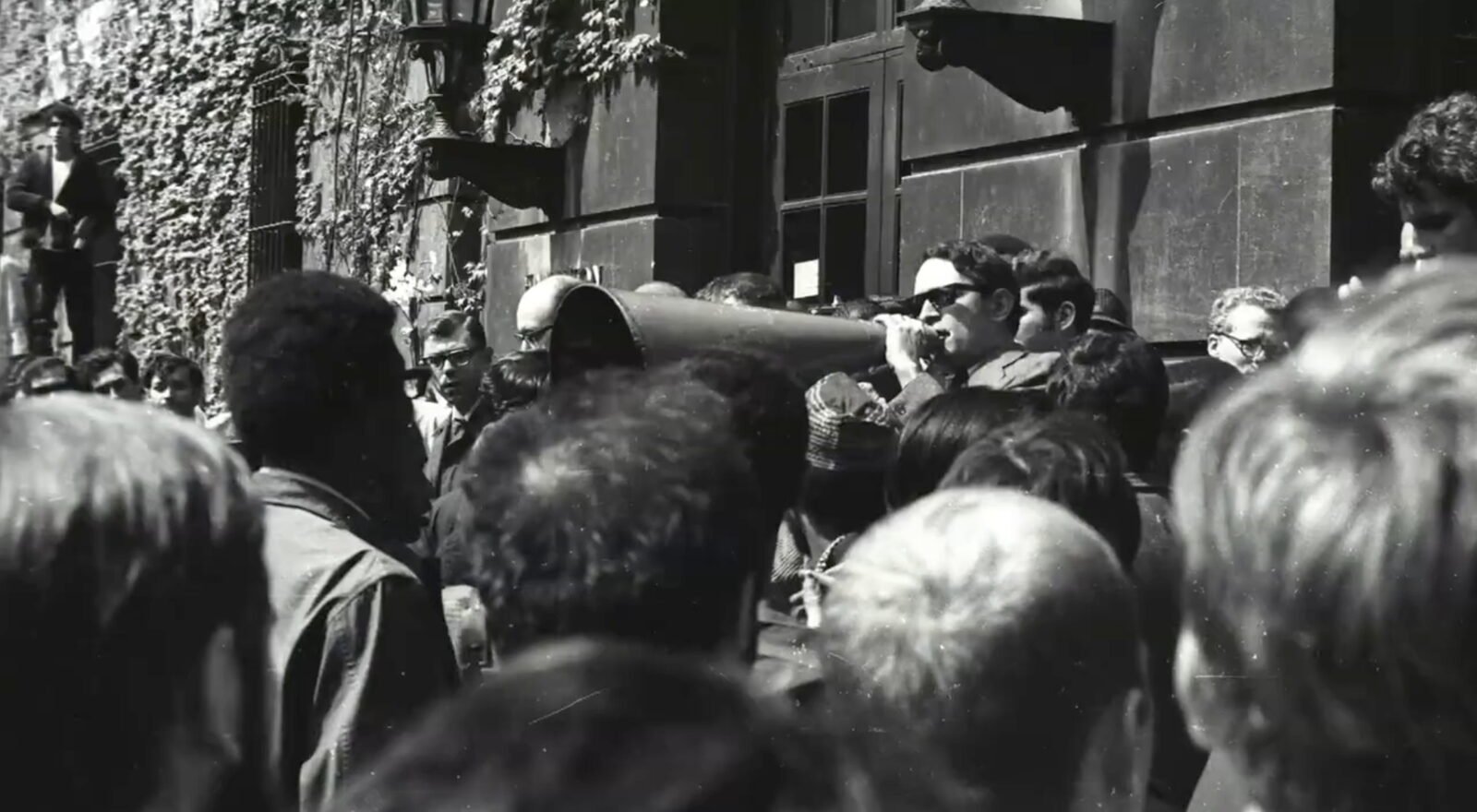
Immanuel Wallerstein was one of the most influential intellectuals of his generation. The extraordinarily prolific scholar published countless books and articles and was a pathbreaking historical sociologist and a pioneer in African Studies, among other fields. While his career has been well-known, especially his development of world-systems analysis, there is much more to discover about Wallerstein’s impact and legacy. One relatively unexplored aspect of his career are his formative years as a student and faculty member at Columbia University, a period when the university, and the world, were radically transformed by the upheavals caused by World War II, the outbreak of the Cold War, and the advent of decolonization. Toward the end of his time at Columbia, Wallerstein sought to interpret how these world historical events transformed the American university.
This conference aims to explore the transformations that influenced, and were influenced by, Immanuel Wallerstein during his years at Columbia. It was during this period that he helped transform sociology as an undergraduate student of intellectual giants like C. Wright Mills, and later as a graduate student, when he made his turn toward politics and history while studying with Seymour Martin Lipset, Hans Zetterberg, and Robert S. Lynd. As a faculty member at Columbia in the 1960s, Wallerstein’s career was profoundly shaped by the outbreak of “antisystemic” movements throughout the world. Wallerstein’s engagements with the movements for African independence led him to offer foundational analyses of the politics of decolonization on the continent. And it was also in this period when Wallerstein was influenced by, and a participant in, the outbreak of what he called “antisystemic movements” of 1968. Indeed, the conference will be timed with the republication of Wallerstein’s University in Turmoil: the Politics of Change, which was originally published in the aftermath of the protests at Columbia in 1968. The conference aims to provoke urgent conversations in another moment when world historical events are dramatically transforming the American university.
Programme
Day 1 — Thursday 22 October
- 3.00pm — Welcome and introduction
Katharine Wallerstein - 3.15–4.45pm — Panel 1: Wallerstein, ’68, Columbia and Beyond
Moderator: Reinhold Martin, Columbia University. With Jodi Dean (Hobart and William Smith Colleges), Frank Guridy (Columbia University), Thai Jones (Columbia Library) and Grant Miner (Student Workers of Columbia). - 5.15–6.45pm — Opening keynote
Robin D. G. Kelley, Distinguished Professor and Gary B. Nash Endowed Chair in U.S. History, UCLA
Day 2 — Friday 23 October
- 9.00–10.30am — Panel 2: World-Systems Analysis and Anti-Systemic Movements
Moderator: Frank Guridy, Columbia University. With Sam Chian (independent scholar, Oslo), Premilla Nadasen (Barnard College), Noah Tsika (Queens College, CUNY) and Mahmood Mamdani (Columbia University). - 10.45am–12.15pm — Panel 3: The Situation of the University, the Situation of Knowledge
Moderator: Katharine Wallerstein. With Gregory P. Williams (Simmons University), Craig Calhoun (Arizona State University) and Romain Huret (President of the EHESS). - 1.30–3.00pm — Panel 4: What Happened to the Global Turn?
Moderator: Bruce Robbins, Columbia University. With Isaac Kamola (Trinity College), Reinhold Martin (Columbia University), Nirvana Tanoukhi (Dartmouth College) and Souleymane Bachir Diagne (Columbia University). - 3.15–4.45pm — Closing session: Reflections
A roundtable with members of Columbia’s Society for Senior Scholars reflecting on the conference and on University in Turmoil: The Politics of Change (Routledge, autumn 2026). - 7.00pm: Closing Reception
Cosponsored by the Society for Senior Scholars; the Society of Fellows and Heyman Center for the Humanities; the Maison Française; the Lehman Center for American History; and the Department of History, Columbia University. Co-organised by the Wallerstein Institute for World Futures.