
Symposium
18–20 March 2027
World-Systems, World Futures: A Symposium
Venue
TBD
City
Paris, France
Host
Partners
Language
English and French
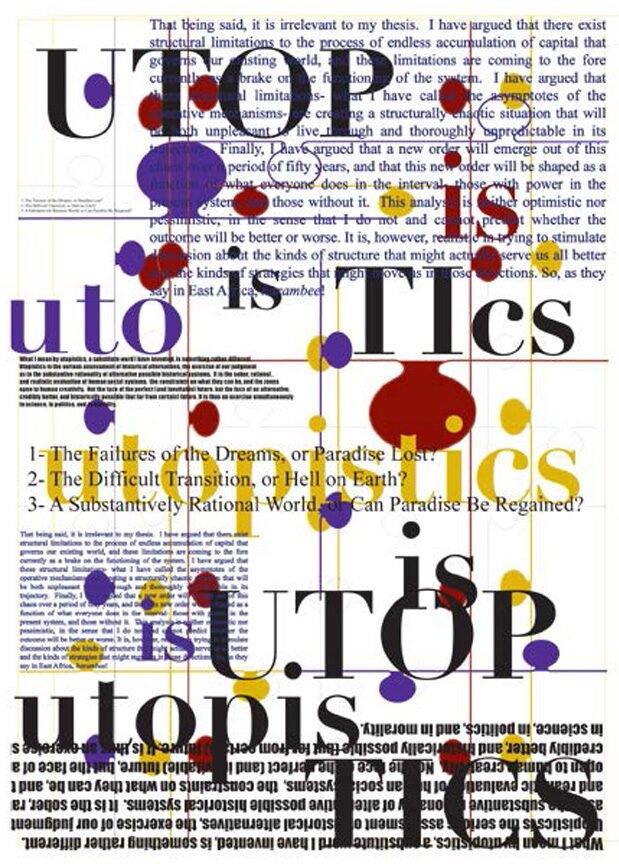
For Immanuel Wallerstein, world-systems analysis was not just a way to understand the past, but, and especially, a way to understand, and act upon, the present. He recognized that we are trapped within 19th century social science paradigms, paradigms that emerged as part of a social and political project of power affecting all segments of civil society and areas of thought. In response, he advocated unthinking the social sciences (Unthinking Social Science, 2001), and opening them (Open the Social Sciences, 2006), insisting that all attempts to understand the world must also double as efforts to change it, calling his quest both intellectual and political, stating “I have always felt it could not be one without being at the same time the other — for me or for anyone (The Essential Wallerstein, 2000).” His book Utopistics (1999) argues that we think imaginatively to rationally actualize a more open and egalitarian world.
To this end, this symposium seeks to reanimate Wallerstein’s key insight, that the capitalist world-system, rather than the nation-state, as traditional social science would have it, is the appropriate unit of analysis for social change. These ideas, primarily expounded in The Modern World-System, vols 1–4, 1974–2004, have had a profound and lasting impact within the social sciences and humanities, and within movements themselves — anti-racisms, anti-imperialisms, and others — worldwide, seeding new forms of action and inquiry on questions of the economy, power, and knowledge. Nation-states do not operate in isolation, but form part of an interconnected system where wealth and power are unevenly distributed. If world-systems analysis was born alongside and in tandem with the radical “Third World” movements of the 1960s and 1970s — African liberation movements and other post-Bandung, post-Belgrade, anti-colonial, and non-aligned movements — our task today is to forge a “we” and an “us” by re-working (Benjamin) an emerging constellation of inheritances.
The Wallerstein Institute for World Futures was created to bring Wallerstein’s insights into the 21st century’s rapidly changing global order. Ambitious and experimental, its aim is to put his analytical frameworks and intellectual-political commitments in conversation with a network of thinkers across academic and creative disciplines, and from regions across the world. In spaces of collective encounter, reflection, and social activation, our aim is not to reproduce his work, but to keep its guiding impetus alive, through creating space for critique and multiple analytical and creative approaches. The Institute, and this symposium, works towards formulating critical questions and fostering encounters with multiple analytical and creative approaches, working towards a new humanism, far from given, adequate to the promise of an open society.
This symposium marks the official launch of the Institute, and is organized according to its thematic platforms, each structured around a core area of focus for Wallerstein, broadened onto other disciplines and approaches, opening onto a collective reflection and activation around the worlds of today and tomorrow. These themes are:
- Systems | assemblages | movements
- Knowledge | poiesis | institution
- Utopistics | invention | emergence
The first encompasses world-systems analysis and antisystemic movements, but also assemblages which are constituted by smaller scales and shorter temporalities. The second draws from Wallerstein’s work on the university, the disciplines, and institutions, on capital and labor, but also on other sites of knowledge production, on aesthetic education, and on creation. The third, stemming from Utopistics’ invitation toward rational, inventive thought through which different expressions of life can emerge, asks that we inhabit spaces of possibility, emergence, and futurity.
We have invited speakers and performers from different disciplines, thinking across hemispheres, for two days of open dialogue and ideas-sharing that will lay the foundation for the Institute’s subsequent programming and activities.
We are grateful to the Open Society Foundations for their support of this event. Additional co-sponsors include the Fondation Maison des sciences de l’homme and the École des hautes études en sciences sociales in Paris; and the Centre for Humanities Research at the University of the Western Cape in Cape Town.
The symposium will be held in English and in French. Location to be announced.
Programme
Schedule and participants in progress.
Day 1 — Thursday 18 March
- 17:00–19:00 — Opening lecture
Judith Butler, Distinguished Professor in the Graduate School, University of California, Berkeley. - 19:00–21:00 — Reception
Day 2 — Friday 19 March
- 9:00 — Coffee and croissants
- 9:30 — Symposium opening
- 10:00–12:00 — Systems, Assemblages, Movements
Chair: Lenny Benardo, Senior Vice President, Open Society Foundations. With Wang Hui (Tsinghua University), Esteban Torres (Universidad Nacional de Córdoba), Leyla Dakhli (CNRS) and Georgi Derluguian (NYU Abu Dhabi). - 12:15–13:15 — Future Remake
Chair to be confirmed. With Tarek Elhaik (UC Davis) and Kriss Ravetto (UCLA). - 13:15–14:00 — Lunch
- 14:00–15:30 — Knowledge, Poiesis, Institution
Chair: Etienne Balibar. With Nadia Yala Kisukidi (New York University and Université Paris 8), Maurits van Bever Donker (University of the Western Cape), Alberto Moreiras (Texas A&M University) and Lau Kin Chi (Lingnan University, Hong Kong).
Day 3 — Saturday 20 March
- 9:30 — Coffee and croissants
- 10:00–11:30 — Utopistics, Invention, Emergence
Chair: Katharine Wallerstein, Director, Wallerstein Institute. With Javier Andrade (Universidad de los Andes), Andrés Claro (Universidad de Chile), Zeynep Gambetti (independent scholar, Istanbul) and Nilüfer Göle (PublicDemoS Project). - 11:30–11:45 — Coffee break
- 11:45–13:15 — What is a joint? The Herds project
Chair: Maurits van Bever Donker, University of the Western Cape. With Siphokazi Mpofu, and Luyanda Nogodlwana or Sipho Nxolo (Ukwanda Puppets & Design Art Collective, Cape Town), and a further participant to be confirmed. - 13:15–14:15 — Lunch
- 14:30–16:00 — Creation, Knowledge, Emancipation (in French)
Chair to be confirmed. With Felwine Sarr (Duke University), Dorcy Rugamba (Rwanda Arts Initiative) and a further participant to be confirmed.