
Immanuel Wallerstein
Immanuel Wallerstein (1930-2019) was an historical sociologist whose development of world-systems analysis had a profound impact on how we understand economies, historical systems, and politics.
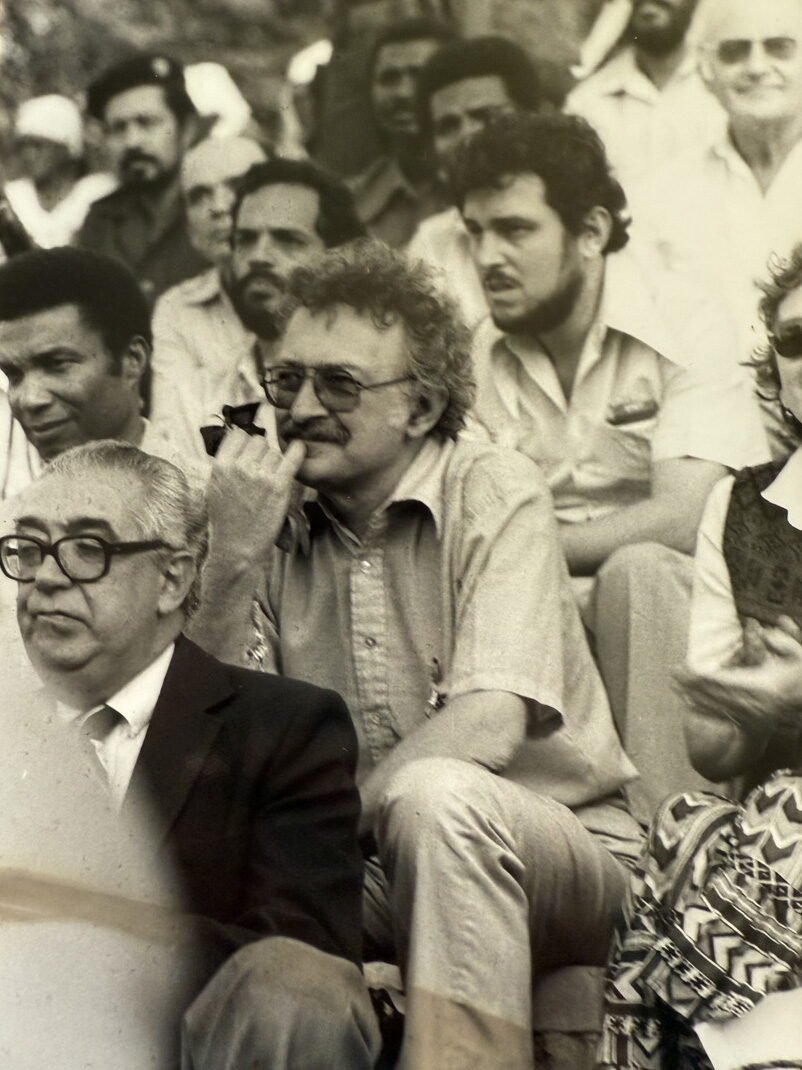
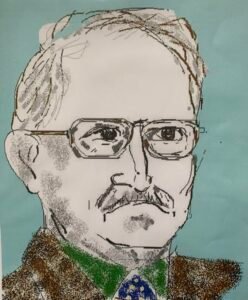 Immanuel Wallerstein (1930–2019) was an historical sociologist, best known for his development of world-systems analysis. Wallerstein’s work focused on the historical development of global capitalism, arguing that the modern world-system emerged in the 16th century and was characterized by a division between the core, periphery, and semi-periphery countries. His influential multi-volume work, The Modern World-System, redefined how scholars understood global history, economics, and political power, emphasizing that nations do not operate in isolation but are part of an interconnected system where wealth and power are unevenly distributed.
Immanuel Wallerstein first became interested in world affairs as a teenager in New York City, and was particularly interested in the anti-colonial movement in India at the time. He attended Columbia University, where he received a B.A. in 1951, an M.A. in 1954 and a Ph.D. in 1959, and subsequently taught until 1971, when he became professor of sociology at McGill University. As of 1976, he served as distinguished professor of sociology at Binghamton University (SUNY) until his retirement in 1999, and as head of the Fernand Braudel Center for the Study of Economies, Historical Systems and Civilizations — “to engage in the analysis of large-scale social change over long periods of historical time” — until 2005. He intermittently served as Directeur d’études associé at the École des Hautes Études en Sciences Sociales in Paris, and, starting in 1975 at the invitation of historian Fernand Braudel until his definitive departure in 2018, spent several months a year at the Fondation Maison des sciences de l’homme. The FMSH was the European hub and counterpart to the Fernand Braudel Center in the US for the development of his work, which developed in successive stages, from the economy and history of the past five centuries, to politics and social movements, to the epistemology of the social and human sciences, all while looking toward the future. At each of these stages he mobilized impressive networks of researchers from all over the world.
Wallerstein held positions as visiting professor at universities worldwide, and was awarded 14 honorary degrees. He was president of the International Sociological Association between 1994 and 1998. During the 1990s, he chaired the Gulbenkian Commission on the Restructuring of the Social Sciences. The object of the commission was to indicate a direction for social scientific inquiry for the next 50 years. In 2000 he joined the Yale Sociology department as Senior Research Scholar, where he remained until his death in 2019. In 2003 he received the Career of Distinguished Scholarship Award from the American Sociological Association.
Wallerstein began his career as a scholar of postcolonial Africa. After the publication of volume one of his four-volume The Modern World-System in 1973 he became known as the founder of world-systems analysis. He writes of his intellectual development in his essay The Development of an Intellectual Position. Rather than a theory, world-systems analysis is a perspective (Wallerstein 2000: 129–148), because it rejects the tradition of nomothetic science rather than offering itself as a theory about the social world (Goldfrank 2000: 160). In the words of his former student Walter Goldfrank:
The world-systems perspective was ingeniously constructed by marrying to a sensibility informed by “Third World” radicalism three major traditions in Western social science, all of them enunciated in opposition to the dominant strain of Anglo-American liberalism and positivism. These traditions are German historical economy, the Annales school in French historiography, and Marxism.
His books and articles have been translated into more than 25 languages.
Curriculum vitae
Education
- B.A., Columbia University, 1951
- M.A., Columbia University, 1954
- Ph.D., Columbia University, 1959
Honorary degrees (Dr. h.c.)
- Univ. Paris-Denis Diderot, 1976
- (Litt. D.), York Univ., 1995
- Univ. Libre de Bruxelles, 1996
- Univ. Nac. Aut. de México (UNAM), 1998
- Ist. Sup. de Ciênças de Trabalho e Empresa (ISCTE, Lisbon), 1999
- Benemérita Univ. Aut. de Puebla (Mexico), 1999
- Univ. of Bucharest, 2001
- Univ. of Alicante (Spain), 2002
- San Marcos (Peru), 2004
- Lund (Sweden), 2005
- Higher School of Economics (Moscow), 2005
- Kharkov National Univ. (Ukraine), 2005
- Coimbra (Portugal), 2006
- Brasilia, 2009
Academic posts
- Senior Research Scholar, Yale University, 2000–2019
- Director, Fernand Braudel Center for the Study of Economies, Historical Systems, and Civilizations, 1976–2005
- Distinguished Professor of Sociology, Binghamton University (SUNY), 1976–1999
- Directeur d’études associé, École des Hautes Études en Sciences Sociales (Paris), 1975–76, 1980–81, 1983–95
- Professor of Sociology, McGill University, 1971–76
- Department of Sociology, Columbia University, 1958–71
- Visiting Professor at Alicante, Amsterdam, British Columbia, Chinese Univ. Hong Kong, Dar-es-Salaam, Illinois, Montpellier, UIMP-Menéndez Pelayo, Montreal, Napoli, Ottawa, Texas
Professional activities
- President, International Sociological Association, 1994–1998
- Chair, Gulbenkian Commission on the Restructuring of the Social Sciences, 1993–1995
- Charter Member, Society for Comparative Research, 1994–present
- Adjunct Scholar Abroad, Institute of Far Eastern Studies, Kyungnam University, Seoul, 1992–
- Member, Advisory Committee on International Programs, Social Science Research Council and American Council of Learned Societies, 1984–87
- Member, World Association for International Relations, 1983–present
- Member, Sociological Research Association, 1980–present
- Member, Board of Directors, Social Science Research Council, 1979–85
- Member, American Council of Learned Societies and U.S.S.R. Academy of Sciences Commission on the Humanities and Social Sciences, 1979–1991
- Member, Executive Council, International African Institute, 1978–84
- Alternate Member, Council, International Sociological Association, 1978–86
- Member, Council, Tocqueville Society, 1978–1982
- Member, Program Committee, IXth Congress, Int’l Sociological Association, Uppsala, 1978
- Co-chair, Association of Concerned Africa Scholars, 1977–91
- Member, Comitato Scientifico, Istituto Int. di Storia Economica “Francesco Datini”, Prato, 1977–2003; Comitato d’onore, 2003–present
- Member, Int. Comm. on the Social and Economic History of Turkey (1071–1920), 1977–present
- Member, Board of Governors, Institute of American Studies (Paris), 1977–81
- Member, Executive Council, American Sociological Association, 1977–80
- Member, Comité de Direction, Groupe État et Capitalisme à l’Époque Moderne, Maison des Sciences de l’Homme, 1976–present
- Vice President, Research Commission, National Movements and Imperialism, International Sociological Association, 1974–90
- President, Research Commission, Centre Québécois des Relations Internationales, 1974–75
- President, African Studies Association, 1972–73
Honors and fellowships
- N.D. Kondratieff Gold Medal, Russian Academy of Natural Sciences, 2005
- Distinguished Fellow, St. John’s College, University of British Columbia, 2004–present
- Centro de Estudios, Información y Documentación Immanuel Wallerstein, Univ. de la Tierra-Chiapas y el CIDECI Las Casas, 2004–present
- Career of Distinguished Scholarship Award, American Sociological Association, 2003
- Career of Distinguished Scholarship Award, Political Economy of the World-System Section of ASA, 2003
- Premio Carlos Marx 2003, Fondo Cultural Tercer Mundo, Mexico
- Leerstoel (Chair) Immanuel Wallerstein, University of Ghent, 2002– (inaugural lecture by IW on 11 March 2002)
- Fellow, American Academy of Arts & Sciences, 1998
- IPE Distinguished Scholar, International Studies Association, 1998
- Gulbenkian Professor of Science and Technology, 1994
- Medal of the University, Univ. of Helsinki, 1992
- Wei Lun Visiting Professor, Chinese Univ. of Hong Kong, 1991
- University Award for Excellence in Scholarship, Binghamton University, 1991
- George A. Miller Visiting Professor, University of Illinois-Urbana, 1989
- Officier, Ordre des Arts et des Lettres, France, 1984
- Sorokin Prize (for Distinguished Scholarship), American Sociological Association, 1975
- Fellow, Center for Advanced Study in the Behavioral Sciences, Stanford, 1970–71
- Ford Fellow in Economics, Political Science and Sociology, 1970–71
- Foreign Area Fellowship, Africa, 1955–57
- Phi Beta Kappa, 1951
Lectureships
- Catedrático, Cátedra Latinoamericana Julio Cortázar, Univ. de Guadalajara, 2006
- Distinguished Lecturer in the Perspective of the World, St. John’s College, Univ. of British Columbia, 2004
- Polson Memorial Lecture, Dept. of Development Sociology, Cornell University, 2004
- John Hanly Furfey Lecture, Association for the Sociology of Religion, 2004
- Ninth Sidney W. Mintz Lecture in Anthropology, Johns Hopkins University, 2003
- Third Annual Urban Lecture, Hunter College, 2002
- Ninth E.P. Thompson Lecture, Working-Class History Seminar, Pittsburgh Center for Social History, 2002
- Eighth Charles R. Lawrence II Memorial Lecturer, Brooklyn College, 2001
- Y.K. Pao Distinguished Lecturer, Hong Kong Univ. of Science & Technology, 2000
- Distinguished Visiting Professor, Amsterdam School of Social Science Research, 1999
- Sir Douglas Robb Lecturer, Univ. of Auckland, 1997
- Daalder Lecturer, Rijksuniversiteit Leiden, 1997
- Tyneside Geographical Society Lecturer, 1996
- Distinguished Lecturer in Historical Geography of Social Change, Assn. of American Geographers, 1992
- Tripartite Lecturer, Royal Geographical Society, Geographical Association, Institute of British Geographers, London, 1988
- Distinguished Speaker, Center for Advanced Study in International Development, Michigan State Univ., 1987
- Marshall Woods Lecturer, Brown University, 1977, 1984
- Cecil H. and Ida Green Visiting Professor, University of British Columbia, 1977
- Distinguished Speaker, International Society for the Comparative Study of Civilizations, 1977
- Sorokin Lecturer, University of Saskatchewan, 1975
- Rosenfield Lecturer, Grinnell College, 1968
Editorial boards
- Editor, Review, 1977–2005
- Editor, Fernand Braudel Center Series, Paradigm Press, 2004–present
- Editor, Studies in Political Economy of the World-System (Paradigm; formerly Sage, Greenwood), 1978–present
- Co-editor, Studies in Modern Capitalism (Cambridge Univ. Press), 1979–present
- Mediterranean Social Sciences Review, 1996–present
- Asian Perspective, 1995–present
- Development and Change, 1994–present
- CEMOTI, 1993–present
- African Journal of Political Economy, 1986–present
- Political Geography, 1982–present
- SUNY Press Editorial Board, 1977–80
- Canadian Journal of Sociology, 1974–78
- West African Journal of Sociology, 1974–present
- Journal of Commonwealth and Comparative Politics, 1973–77
- Africa Today, 1968–present
- African Studies Bulletin, 1965–69
Immanuel Wallerstein (1930-2019) was an historical sociologist whose development of world-systems analysis had a profound impact on how we understand economies, historical systems, and politics.